Showing posts with label private label. Show all posts

2009/08/12

MEDIA - The Promise of Private-label Media

A direct-to-consumer media strategy can help companies build brands and reach consumers in new ways.

  • Just about every company has a Web site. But today, many marketers are going further.
  • They are transforming their digital presence into powerful media channels, direct to consumers.
  • The practice is prevalent enough that, as the research firm Outsell Inc. reported in July 2008, about 62 percent of marketers’ online advertising and marketing budgets are spent on their own digital media.
  • These marketers recognize that with the right mix of content, utility, community, and product, they can create compelling premium experiences for consumers.
  • And they see that these efforts deliver powerful benefits in branding, relationship building, and lead generation.

The growing popularity of “private-label media,” as we call it, is one of the more provocative — and potentially disruptive — developments occurring in today’s marketing and media ecosystem.

  • Every marketer, advertising agency, and media company needs to be aware of its benefits and, just as important, its implications for the industry.
  • The emergence of private-label media represents both a compelling way to engage consumers and yet another challenge to long-standing media business models.
  • The more that is spent on private-label media, the less that may be spent on conventional advertising, especially in the digital realm.

Company Web sites began directly targeting consumers about a decade ago. Since then, there have been some high-profile and highly expensive misfires

  • Anheuser-Busch’s http://www.bud.tv/ was launched in 2007 with fanfare, only to be shuttered quietly early in 2009.
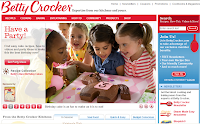
  • But there have also been many notable successes. General Mills’ http://www.bettycrocker.com/ enjoys more than 8 million unique visitors per month, roughly comparable to the numbers at http://www.foodnetwork.com/ — a rival with a popular television network sibling.
  • Kraft Foods’ iFood Assistant ranks among the most frequently downloaded applications on Apple’s iPhone.
  • Procter & Gamble’s Olay for You platform for consumer education in the health and beauty category includes a highly trafficked Web site and in-store kiosks rolled out in partnership with Walmart.
  • Rapid growth in private-label media has also occurred among business-to-business markets. For example the Home Depot launched http://www.hdbusinesstoolbox.com/ to deepen its connection to contractors, offering them business management tools as well as negotiated discounts and services such as insurance, telecommunications, and printing.

As marketers gain more experience with developing and managing private-label media, we expect them to make it an expanding part of their marketing arsenal.

  • The greatest distinguishing factor for successful entries will be the ability to create branded destinations that translate into relationships, community, and utility for consumers.
  • These are not digital infomercials; the best private-label media connect consumers directly to brands.
  • Consumers can design and test new products, enter online forums where other brand enthusiasts share their perspectives, and take advantage of unique brand offers and ancillary services.

The Lego Group provides a good example of innovative marketing with private-label media.

  • The company has built an extensive set of consumer touch points using its own digital media: a fan club, a social network, online games, message boards, online movies, and soon its own massive multiplayer game.
  • On http://www.legofactory.com/ , consumers can design their own products.
  • By joining a network of approximately 120,000 self-identified volunteer designers, fans interact, suggest product ideas, and become “ambassadors” to spread the word about new offerings.
  • In this way, Lego facilitates direct conversations between the company and its consumers as well as conversations among the brand’s devotees.
  • For Lego, the private-label media strategy is paying dividends.
  • Lego has become a major digital brand in the U.S., rivaling traditional media players such as Nickelodeon and Cartoon Network Online in its core demographic of boys ages 6 to 11.
  • This digital marketing innovation is one of the contributors to Lego’s recent success — the company posted a 19 percent increase in annual sales in 2008, despite a declining market for toys globally.

read the end of the article under:

http://www.strategy-business.com/resilience/rr00072?pg=1

2009/08/04

PRIVATE LABEL - growth driven by innovation

Private label product innovation has reached unprecedented highs and market share has rocketed as a result
  • In the US, private label foods have accounted for 27 percent of food introductions so far this year – or nearly 1,800 new food products, according to Mintel’s Global New Products Database. This is up from a 13 percent share in 2005.
  • The rising level of consumer acceptance for private label foods has widely been seen as a result of the global economic downturn, but although previous recessions have proved a boon to the sector, Mintel claims that this time is different: Consumers’ expectations of store brands have changed and so have the products.
  • Senior analyst at Mintel Krista Faron said: "Not only have private label introductions increased, but product innovation is reaching unprecedented highs. Retailers no longer only launch 'me-too' products to compete against major national brands. Instead, private label lines are hotbeds of creativity, driving markets and establishing themselves as trend leaders."

Health and wellness

  • Unlike other recessionary periods, the private label products now on offer are not just cheap imitations of familiar brands. Store brands are striving not only to keep up with, but also to surpass, their branded rivals in terms of innovation, bringing a new focus on ingredients for health and wellness in particular.
  • "Private label manufacturers realize 'value' means more than 'low price' to consumers, so they're wisely creating new products that deliver on some of today's most exciting food trends," said Faron.
  • The organization gives Lucerne’s Eating Right line of private label foods as an example. The range includes Whole Wheat Mini Ravioli for kids, with fiber and protein; Apple Cinnamon Granola, fortified with plant sterols; and Light Ice Cream Cups, with probiotics.

‘Premium’ private label

  • Apart from private label products competing on the health and wellness ingredients front, the recession has had a big effect on other forms of innovation in the sector. This is not simply because shoppers are ‘trading down’ from their favorite brands, but because they are buying more premium in-home meals as they cut down on eating out, and buying more lunch products for eating in the office, such as private label soups. And private label is increasingly providing upscale products that promise quality ingredients.
  • Mintel forecasts that the private label sector will grow by 8.1 percent before the end of the year. In 2008, the US market grew by 9.3 percent, compared to just 4.5 percent for branded foods, the organization said.
  • Private label products account for more than $81bn in the US, with health and wellness claims including no trans fats, no saturated fats, multi-grains and antioxidants among the strongest-growing categories.
  • In the 2001-2003 recession, private label’s unit market share climbed from 20 percent to 21.8 percent, according to the Private Label Manufacturers Association. And in the 1990-1991 recession, unit share for retailer brands moved up from 17.6 percent to 20 percent.

reported by: By Food&drinkeurop.com - Caroline Scott-Thomas, 24-Jul-2009

2009/08/03

PRIVATE LABELS: Parents avoid switching for their children

While the switch to private labels may be gathering pace, consumers are reluctant to switch to store brands on purchases for children, says a new survey.

  • Consumers have increasingly turned away from national brands towards private label, or store brands, as they have begun to feel the effects of the economic downturn. The latest survey, carried out by ICOM, a division of Dallas-based Epsilon Targeting, suggests that the “perceived risk” of children’s products leads to a reluctance to change to sort brands.
  • “Perceived risk, that’s what is driving these key consumer decisions. This is the kind of insight that national brands can use to reach customers with promotions that meet their needs and bring them back,” said Warren Storey, ICOM marketing director.
  • “These results highlight that understanding customer psychology, and tailoring promotions accordingly, is a significantly more effective win-back strategy than scatter-shot, one-size-fits-all offers.”
  • Last week, FoodNavigator-USA.com reported on results from a poll by GfK Custom Research North America for the Private Label Manufacturers Association (PLMA), which found that over 90 percent of American consumers say they are likely to continue buying store brands even after the economy improves, and nearly half would like to see more of them.
  • The poll also showed that 35 percent of consumers are trying private label products for the first time in categories where they once only bought national brands – and 94 percent said the store brand products compared favorably.
  • The new poll shows that 59 per cent of the 1,530 American consumers surveyed by ICOM have switched to store food and household products and away from national brands in the past six months.

However, when it comes to store brands for children and pets, American consumers are far more reluctant to switch from national brands.

  • “The good news for national brands is that there is, in fact, an opportunity to win back customers who have switched. Some marketers were worried they’ll never return. But the win-back depends on knowing who is switching and why, and responding with targeted incentives based on that strategic information,” said Storey.
  • In the 2001-2003 recession, private label’s unit market share climbed from 20 percent to 21.8 percent, according to the PLMA. Likewise, in the 1990-1991 recession, unit share for retailer brands moved up from 17.6 percent to 20 percent. And consumers tended to stick with private label even after the economy recovered.
  • Private label products account for more than $81bn in the US, with health and wellness claims including no trans fats, no saturated fats, multi-grains and antioxidants among the strongest-growing categories.

By FoodandDrinkeurope.com

2009/07/31

PRIVATE LABEL - peak has passed, says analyst

10-july-2009 (remember, 10 days ago we found PRIVATE LABEL - Consumers want more private label products (survey) ... which expert is right? make your comments!) Branded food and beverage manufacturers are fighting back against private label, according to a Bernstein researcher, and after a switch caused by price ‘sticker shock’ many consumers go back to their favourite brands.
  • With the world in the grip of a deep recession and high food prices on shoppers’ minds, private label has looked like an unstoppable trend.
  • Indeed, in mid 2008 private label was growing well ahead of the market, according to Eric Sher, research associate for European food at investment firm Berstein. But he believes that private label peaked last summer.
  • In the four weeks to 24 May, private label goods saw 1.1 per cent growth. Although this remains ahead of market-wide growth, it was the 11th consecutive period of deceleration – and the worst growth period since tracking began.

Switch back

  • “Private label gains share in a recession or when prices are up,” Scher told FoodNavigator.com. “Sticker shock” – consumers’ reactions to higher food prices, compounded by the recession – means people switch to private label.
  • But after that the tendency is for the growth rate and market share gains to start decelerating. Some people may decide they don’t like it the private label version so much, or the sticker shock wears off on the next shopping trip.
  • “People underestimate the power of brands,” Scher said.
  • Moreover, big brand manufacturers have not been sitting back idly and watching private label steal their market share.
  • The likes of P&G, Unilever and Reckitts Benckiser are investing heavily in innovation, and are coming out with value offerings of their own that are competing with private label directly.
  • “They will come out of this mess a lot stronger,” predicts Scher. The underlying force is value; and he pointed out that it is not only the price of branded goods that increases when commodity costs are high. Since they are hit by the same high input costs, “in reality, private label products have increased in price too.”

Euro differences

  • Bernstein’s analysis looks at the five biggest European markets – the UK, Spain, France, Germany and Italy.
  • Scher conceded that Europe is a vast market, and there are great differences in the state of private label market between them.
  • In Germany, for instance, he expects hard discount stores to remain a major force and continue to take share. But he pointed out that Nestle has actually launched some products especially for hard retail.
  • The PPP strategy – popularly positioned products – is also useful in emerging markets: selling very low-priced single serve products, such as a single stick of coffee that allows consumer to buy the brand without paying the price of a whole jar.

by By Jess Halliday, 10-Jul-2009 - Food navigator.com

2009/07/14

PRIVATE LABEL - Consumers want more private label products (survey)

By Caroline Scott-Thomas, 30-Jun-2009 More than 90 percent of American consumers say they are likely to continue buying store brands even after the economy improves, and nearly half would like to see more of them, according to a new survey.
  • Consumers have increasingly turned away from national brands towards private label, or store brands, as they have begun to feel the effects of the economic downturn. This latest survey, carried out in June, suggests that shoppers are sufficiently impressed by their quality to keep buying them.
  • The poll, which was conducted by GfK Custom Research North America for the Private Label Manufacturers Association (PLMA), showed that 35 percent of consumers are trying private label products for the first time in categories where they once only bought national brands – and 94 percent said the store brand products compared favorably.
  • “This positive experience makes shoppers eager for an even greater assortment of store brand products from which to choose,” said the PLMA.

Quality for loyalty

  • The survey results add to a burgeoning body of evidence from market research organizations indicating the importance of quality in developing consumer loyalty to store brands.
  • A host of earlier market research from The Nielsen Company, NPD Group, Brandweek and The Hartman Group, has pointed to a consumer quest for value in times of economic downturn, but the organizations are agreed that value encompasses more than price alone.
  • Although the PLMA said that “the recession continues to influence shoppers’ decisions on store brands”, with 74 percent of respondents saying it is an important factor in their decision making, the organization has said that quality is key to sustaining private label growth.

Previous recessions

  • In the 2001-2003 recession, private label’s unit market share climbed from 20 percent to 21.8 percent, according to the PLMA. Likewise, in the 1990-1991 recession, unit share for retailer brands moved up from 17.6 percent to 20 percent. And consumers tended to stick with private label even after the economy recovered.
  • However, the results were quite different in the 1980-1982 recession. Private label market share climbed rapidly during that period, as retailers introduced many budget-priced ‘generic’ product lines with basic black and white packaging and low-quality ingredients. But these gains were short-lived, as shoppers were disappointed with quality and soon switched back to their favorite national brands, the PLMA said.
  • Private label products account for more than $81bn in the US, with health and wellness claims including no trans fats, no saturated fats, multi-grains and antioxidants among the strongest-growing categories.